
From deer parks and nature reserves to canals, wetlands and museum experiences, Chris Johnson discovers a wilder side of the capital this month.
As Sir David Attenborough turns 100 years old on 8 May, and London Rivers Week marks its 10th anniversary, focus turns to how nature and city life coexist. A heron taking flight from a canal edge, deer crossing open grass at first light and parakeets moving against the backdrop of royal palaces – these are not exceptions. London’s wild spaces run through the very heart of the capital.
Living Landscape
The Royal Parks provide the clearest expression of natural life, spanning almost 5,000 acres across eight parks. In Richmond Park, red and fallow deer move across grassland beneath ancient oaks, part of a landscape shaped over centuries and designated a National Nature Reserve and Site of Special Scientific Interest.
In central London, Hyde Park stretches across 350 acres, divided by the Serpentine lake and long associated with public gatherings, large-scale events and its resident herons.
For a more nature-focused experience, head for the serene northern meadows and winding paths, while the rose garden sits close to Rotten Row, the historic route linking Kensington Palace to Whitehall. From here, the park turns into a green corridor leading to Green Park.
Just steps from Buckingham Palace and bustling Piccadilly, this quieter 40-acre expanse is defined by mature trees, open grassland and flocks of green parakeets. Created by King Charles II in 1660, it allowed the monarch to walk between Hyde Park and St James’s Park without leaving royal land.
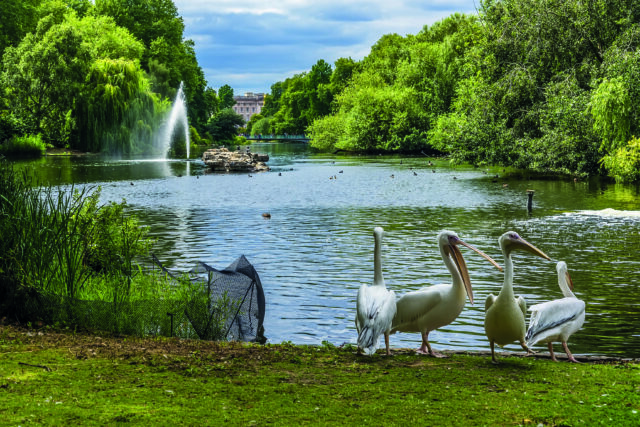
In St James’s Park, the oldest Royal Park, pelicans and other birds occupy a landscape framed by government buildings and royal residences. Shaped by successive monarchs and bordered by three palaces, it remains the most ceremonial of London’s parks, hosting state occasions from military parades to royal celebrations. Its most recognisable residents, the pelicans, were introduced in 1664 as a gift to King Charles II from a Russian ambassador.
Hidden in Plain View?
Camley Street Natural Park, beside Regent’s Canal in King’s Cross, compresses wetland, meadows and woodland into a compact reserve. Reed beds draw in birds and insects and ponds hold still water within metres of passing trains.
Managed by the London Wildlife Trust, it demonstrates how biodiversity is sustained within dense urban conditions. Similar reserves exist across London, forming a network of habitats that support pollinators, birdlife and aquatic species.
The park comes to life during International Dawn Chorus Day, marked each year on the first Sunday in May (3 May), when early-morning birdsong becomes the defining experience.
Waterways
Water runs through all of this. During London Rivers Week (23-31 May), attention turns to the network of more than 40 rivers and waterways that shape the city, as well as the long-term efforts to restore and protect them. What was once overlooked infrastructure is increasingly understood to be an active ecological system, sustained not only by geography, but by ongoing conservation and community involvement.
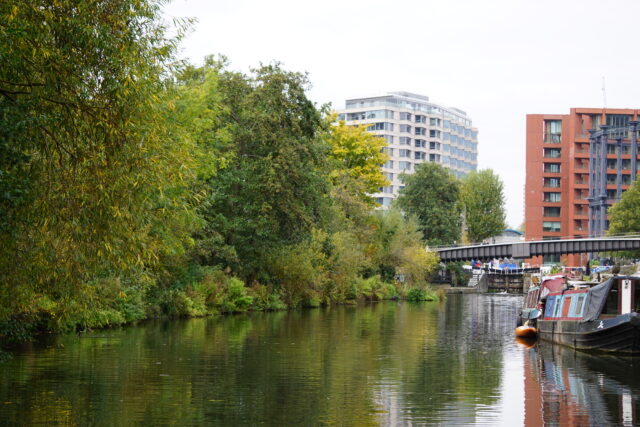
Along Regent’s Canal, towpaths follow routes that were built for industry but have now been repurposed for pure enjoyment. Moorhens feed along the margins and grey herons stand at the water’s edge. Events during the week, from walks to clean-up initiatives, draw attention to the condition and continuity of these waterways without interrupting their everyday function.
Wild Encounters
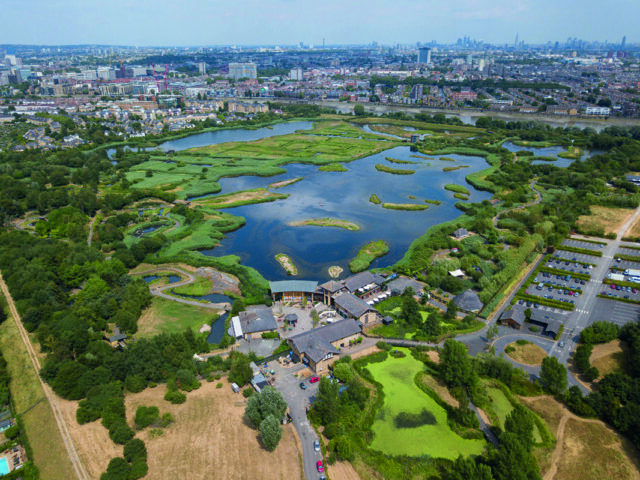
For those looking to engage with nature directly, the city offers many ways to observe its natural systems. Guided walks led by the London Wildlife Trust open reserves that might otherwise pass unnoticed. At the WWT London Wetland Centre in Barnes, former reservoirs have been reshaped into lagoons, reed beds and grazing marsh that attract migratory birds, insects and amphibians, with hides and boardwalks encouraging viewing.
Further east you’ll find the Walthamstow Wetlands, where reservoir basins stretch across the Lee Valley, forming a vast Thames Water site that supplies drinking water to more than three million people. It also functions as an internationally important nature reserve where waterfowl and birds of prey flit between open water and scrub-lined banks.
Wide views towards the city contrast with verdant plants where birdlife gathers, while the reservoirs form the largest fishery in London. Running until 30 June, The Very Hungry Caterpillar Trail offers a family-focused route through the site, guiding visitors along the main paths as late-spring activity becomes more visible across the wetlands.
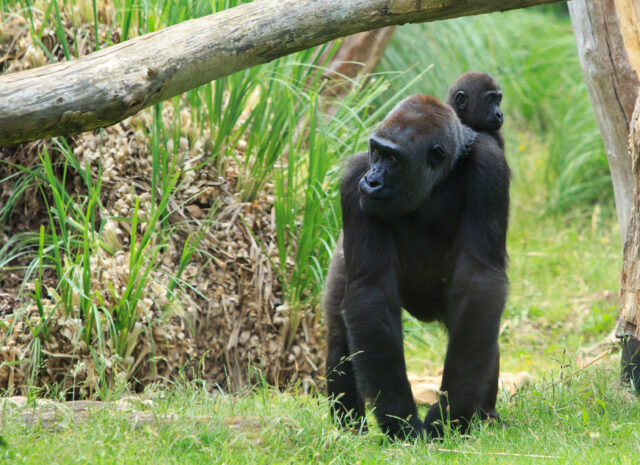
At London Zoo in Regent’s Park, the emphasis shifts from observation to interpretation. Set within one of the city’s leafy Royal Parks, the zoo combines historic Victorian architecture with more recent habitat design, including Land of the Lions and Gorilla Kingdom. Species range from Asiatic lions and Sumatran tigers to reptiles and invertebrates, with conservation, research and education forming a central part of the visitor experience.
Nature In Detail
The Horniman Museum & Gardens in Forest Hill shifts the focus from landscape to close observation. Its Butterfly House recreates a tropical, planted habitat, in which hundreds of butterflies flutter freely around visitors. Species feed, rest and take flight at close range, offering a direct view of their life cycle and behaviour rarely seen in the open city.
Beyond this, the Horniman’s living collection extends across the Animal Walk, aquarium and 16-acre gardens, where ponds, meadows and enclosures support a range of species and habitats within a single site.
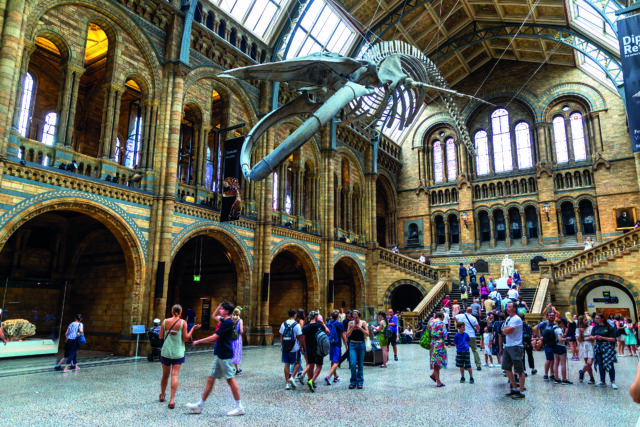
Centenary celebrations
Anchoring all of this is the Natural History Museum, which houses unique treasures from its collection of more than 80 million objects spanning 4.5 billion years. Our Story with David Attenborough (to 31 Aug) is an immersive installation. that places human life within a broader environmental timeline, using large-scale projections and narration to examine how ecosystems function and change.
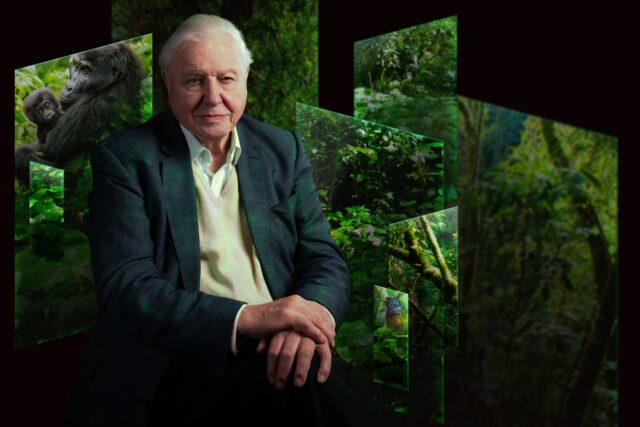
David Attenborough: 100 Years on Planet Earth at the Royal Albert Hall (8 May) brings that perspective into a live setting. Presented by the BBC, the event traces a century of natural history storytelling through Attenborough’s career, from his early fieldwork to landmark series that reshaped how television engages with the natural world.
Accompanied by the BBC Concert Orchestra, it features original compositions from his best-known shows, paired with footage and contributions from conservationists. The evening connects his legacy to ongoing questions about how the natural world is protected.
Wild London is on your doorstep, just waiting to be discovered.